
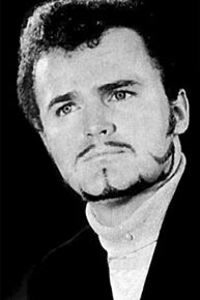
Count Dante
John Keehan was a real early American karate instructor, tournament promoter and salesman. “Count Dante” was the commercial character he built around that foundation: a fake aristocrat selling an unverifiable mythology of secret, lethal knowledge to comic-book readers.
Finding
The fraud was not that Keehan had never trained. He had. The fraud was the product he sold under the Count Dante name: that he was uniquely qualified as “The Deadliest Man Alive”; that his system offered killing power unavailable in ordinary martial arts; and that a buyer could acquire that authority through a mail-order booklet and membership card. The claims were advertising, not demonstrated martial knowledge.
The real John Keehan
Keehan boxed as a teenager, learned hand-to-hand and jujitsu techniques during military service, trained under karate pioneer Robert Trias, and became the United States Karate Association’s Midwest representative. He ran Chicago schools and promoted early cross-style tournaments. Those are real contributions to an energetic, rough-edged period in American martial arts. The contemporary historical account assembled by Dojo Press records both that background and eyewitness praise for his basics, form and technique.
That distinction matters. A dossier should not pretend a capable instructor was incapable merely because the later branding was ridiculous. Keehan had a credible early karate connection. It does not validate everything he later put in an advert.
What Count Dante sold
In 1967 Keehan legally adopted the name Count Juan Raphael Dante and promoted an aristocratic Spanish backstory. He then marketed World’s Deadliest Fighting Secrets, the “Dance of Death” and membership in the Black Dragon Fighting Society through comic books. The sales copy did not make a modest claim about practical self-defence. It promised the “deadliest and most terrifying fighting art known to man”, “poison hand” weapons, and the capacity for an expert in Dim Mak to kill several trained martial artists with fingertip pressure.
The membership card came with the purchase. It was not evidence that the purchaser had trained, been tested, or entered a serious martial organisation. The society’s aura of exclusivity was part of the product. Calling it a secret fraternity did not give it a documented link to Japan’s Kokuryūkai, nor did it turn a mail-order transaction into martial qualification.
Death matches, death touch and evidence
Count Dante also boasted of secret death matches in Thailand and China, including killings before huge crowds. Black Belt’s account records that these were his boasts. It does not supply independent records of named opponents, dates, venues, officials, contemporary reports or any other evidence that such contests occurred. A sensational claim repeated in promotional material remains a claim.
The same applies to the advertised Dim Mak “death touch”. Contact techniques can injure people; that banal fact does not establish a reliable method for killing or paralysing trained opponents with a fingertip. No credible demonstration accompanies the comic-book promise. A system sold as uniquely lethal should leave more than a dramatic headline and an order coupon.
When the theatre became real violence
The “deadliest” persona was not harmless theatre. In 1965, Keehan was arrested after an attempt to use a dynamite cap against a rival school; the historical account records charges including attempted arson and a two-year probationary sentence. In 1970, he and associates went to the Green Dragon Society’s Black Cobra Hall during the Chicago “dojo wars”. The confrontation ended with the death of his friend and fellow instructor Jim Koncevic. Keehan was later acquitted in the resulting case.
The acquittal must be stated. So must the basic judgement: an instructor leading students into a rival school for a violent confrontation is not demonstrating superior martial ethics or secret mastery. It is the ordinary failure of machismo, made worse by authority over students.
Conclusion
Count Dante was a real martial-arts figure who became a fraud in presentation. Keehan took limited, genuine credentials and inflated them into invented nobility, secret death matches, an unverified “death touch”, and a mail-order brotherhood of lethal experts. He did not sell evidence. He sold menace, fantasy and a membership card.
That is why he matters. The clothes have changed, but the method survives: a little real experience, an enormous claim, a private title, no independent proof, and a customer invited to buy status rather than earn competence.
Sources
- Dojo Press: “The Life and Death of the Deadliest Man Alive” — detailed historical reporting on Keehan’s training, schools, promotion, criminal case and death.
- Black Belt: “Count Dante’s Inferno” — record of the Count Dante persona, claimed death matches, advertising and the 1970 confrontation.
- The Search for Count Dante — documentary project preserving historical material and identifying the self-promoted “Deadliest Man Alive” persona.
- Martial Arts Frauds and Fakes: “Count Dante” — secondary sceptical overview; used as a lead and cross-check, not as sole proof.